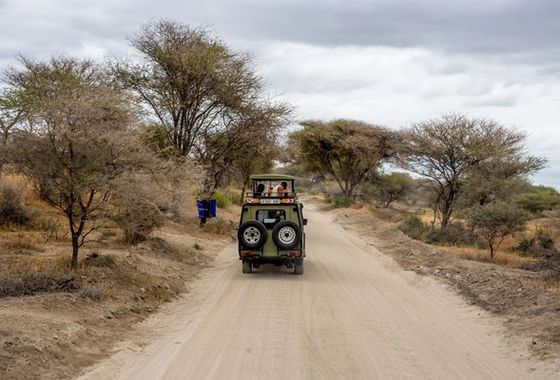
The jeep pulls out of camp a little before the light turns, and for the first twenty minutes there is nothing to report. That's normal here. Jawai isn't a dense forest with animals stacked behind every tree — it's open granite and thorn scrub, and a drive is mostly reading rock. Our guide keeps the jeep slow, scanning ridgelines rather than the track ahead, and explains without being asked that this time of evening is when the hills start to work in your favour: the sun drops low enough to throw long shadows off every boulder, and anything moving against that low light gives itself away.
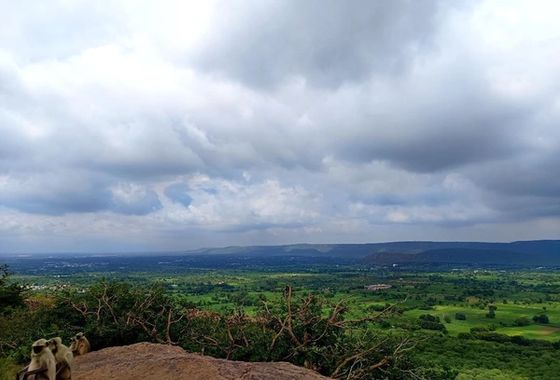
We stop at a rise overlooking a shallow valley of scattered kopjes. Somewhere below, a langur troop is calling — not urgently, just keeping contact — and our guide notes it without much comment, the way you'd note a text notification. Twenty minutes pass. The light keeps softening, the granite going from grey to something closer to amber.
Then the jeep stops without anyone asking it to.
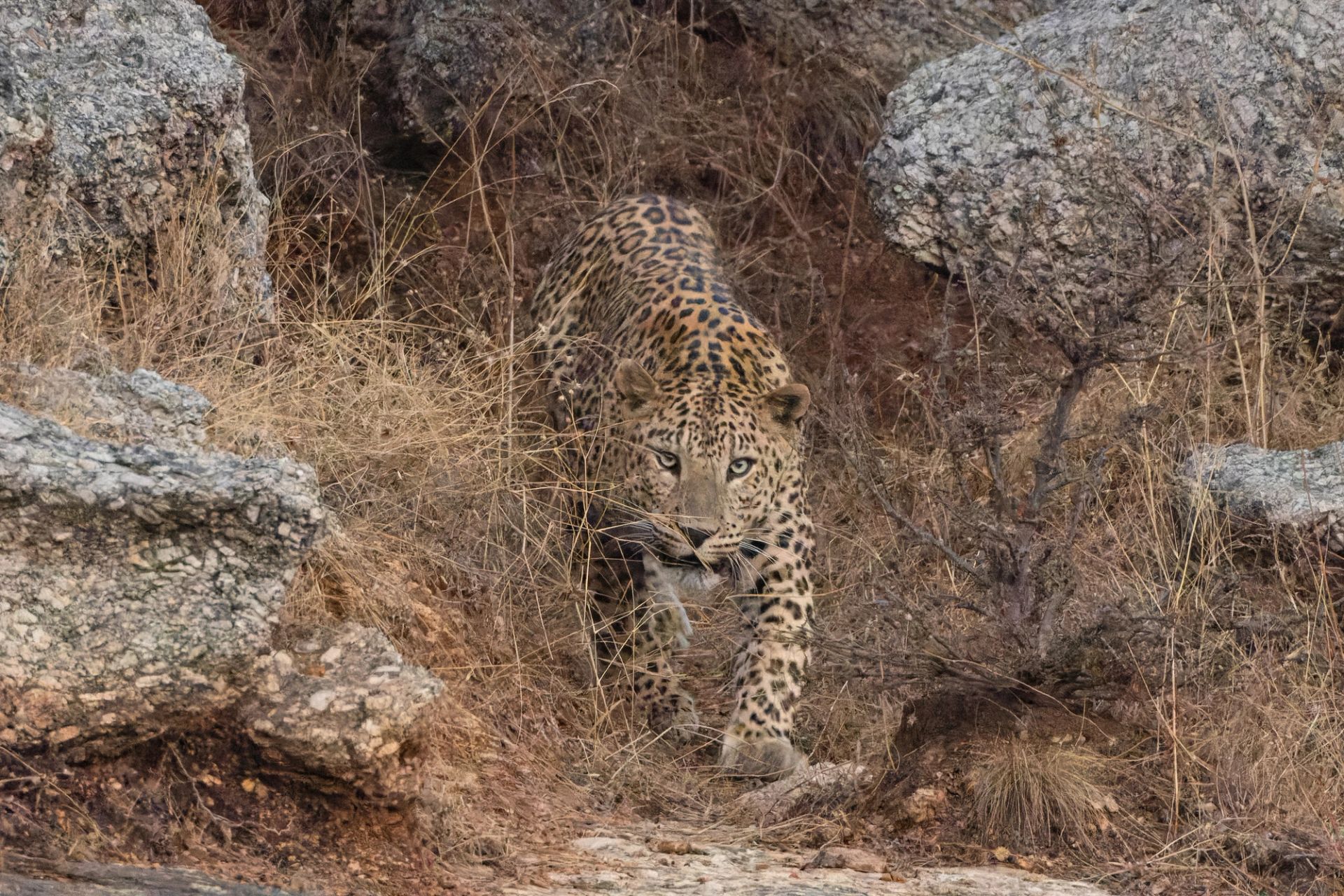
Our guide has found a shape on a rock face maybe two hundred metres off — low, coiled, still enough that it takes a moment to separate from the stone around it. Binoculars up, and the shape resolves into an ear, then a tail curled along the rock's edge, then unmistakably a leopard, settled on a ledge that catches the last of the sun.
It doesn't do much. That's the honest version of most leopard sightings — no chase, no drama, just an animal being patient with the last warm surface of the day, occasionally turning its head toward a sound none of us can hear. We sit with the engine off, watching it watch the valley, for longer than feels reasonable to expect from a wild animal that owes us nothing.
Eventually it stands, stretches in that unhurried way cats have of making every movement look optional, and drops off the far side of the rock into cover. Gone in under a second, after twenty minutes of barely moving at all.
The drive back to camp is quiet in a different way than the drive out. Nobody is scanning ridgelines anymore. The light is nearly finished, the granite hills going dark blue against a sky that hasn't decided yet, and there is exactly one thing worth saying, which our guide says first: that's Jawai. Not always fast, not always close — but when it happens, you don't forget where you were sitting.
Why dusk works so well in Jawai
Leopards here den in granite crevices through the heat of the day and become active as the rock faces cool toward evening, which is exactly why dusk drives like this one tend to outperform midday attempts. Our first-timer's guide to Jawai covers how to plan a similar drive.